
Puppy Food is one of the biggest factors in your puppy’s healthy growth and helps build a strong foundation for a happy, active life. Creating a complete feeding guide for a puppy can sometimes feel like trying to put together a puzzle without having the original picture. Every puppy is unique. Some grow very quickly, while others mature slowly. Choosing the right puppy food has a significant impact on overall health. Whether it’s about supporting strong bones, a sharp mind, and a powerful immune system. The diet you provide your puppy today lays the groundwork for a healthy and happy future.
If you have ever stood in a pet store feeling overwhelmed by the countless brands, marketing claims, and colourful labels, trust me, you are not alone. This guide explains what to feed a puppy, how to understand nutrition needs, and how to make practical decisions that support lifelong health.
Understanding Your Puppy’s Nutritional Needs
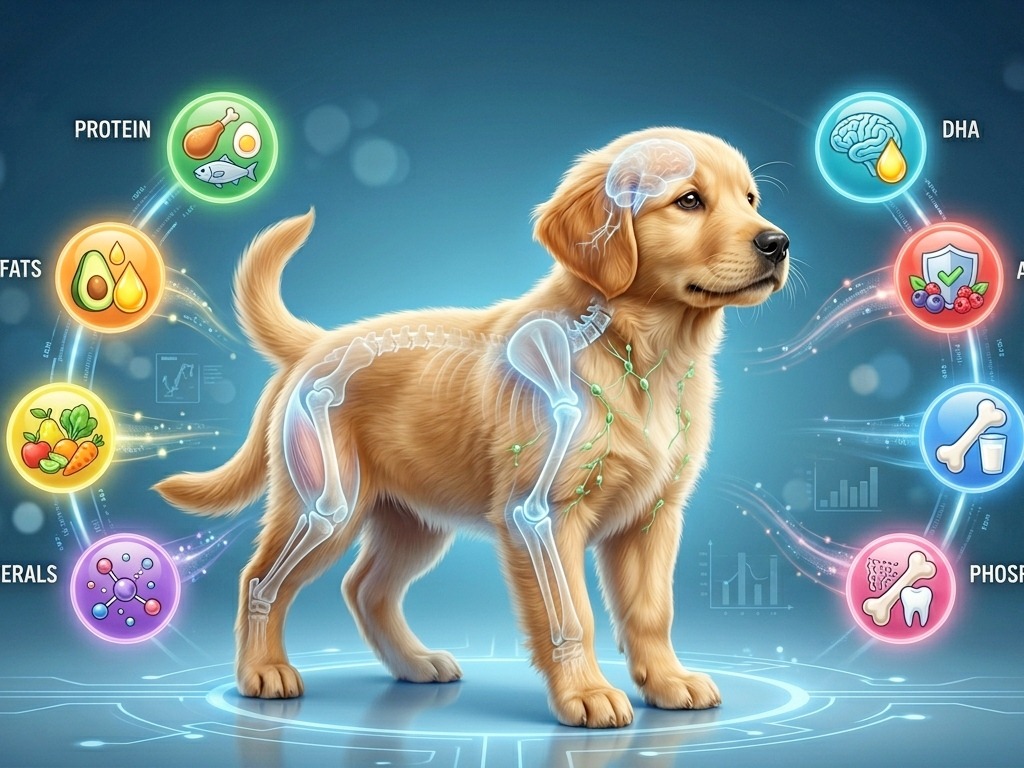
The needs of growing puppies go far beyond calories. But require full and balanced nutrition. Your puppy’s growing body needs the right mix of protein, fats, vitamins and minerals. antioxidants to guard against disease, amino acids for muscles, calcium and phosphorus for skeletal growth. Good puppy food, high quality. DHA in puppy food helps in improving brain development and mental performance.
Puppies and adult dogs have different nutritional needs. Puppies need to eat nutritious food as they burn energy up really fast. Too early exposure to adult formulas can interfere with development. The right nutrition for puppies is growth, but not too much. This is especially important for large breeds that need their minerals regulated.
Essential Nutrients Puppies Need
Protein works as a building material. Healthy fat fuel provides energy and helps in the absorption of vitamins. Minerals make strong bones, while vitamins keep a healthy metabolism. Often, ignore the water, which is an important factor in keeping every system in the body functioning properly and efficiently.
Why Puppy Food Is Different From Adult Dog Food
Puppies require a higher nutrient density. Their bodies make new tissues, muscles, and bones. Whereas an adult dog’s diet is designed to maintain its current health and body condition, not to promote further growth. These distances make it important to choose age-appropriate puppy food.
What Is the Best Puppy Food?
The best puppy food is based on complete and balanced nutrition. Look for products that are labelled AAFCO-approved puppy food, meaning they meet set nutritional standards. One of the first ingredients should be named animal proteins. In many cases, transparency in manufacturing means greater accountability.
Ingredients beat marketing slogans. Nutrients such as DHA, omega-3 fatty acids, probiotics, and antioxidants help promote healthy development. Targeted benefits during important growth periods can be provided by formulas designed to support immune, digestive, and skin and coat health.
| Nutrient | Primary Benefit |
| Protein | Muscle development |
| DHA | Brain and vision support |
| Omega Fatty Acids | Skin and coat health |
| Probiotics | Digestive balance |
| Antioxidants | Immune support |
| Calcium & Phosphorus | Bone growth |
What to Look for in Quality Puppy Food
Choosing foods that have clean protein, high-quality sources, healthy fats and the proper life-stage labelling. Beautiful packaging, attractive claims and no substance is the right choice of puppy food.
Ingredients That Support Healthy Growth
Growth-supporting nutrients should work together. Even formulas support consistent growth without nutritional gaps.
Types of Puppy Food: Which One Is Right for Your Puppy?
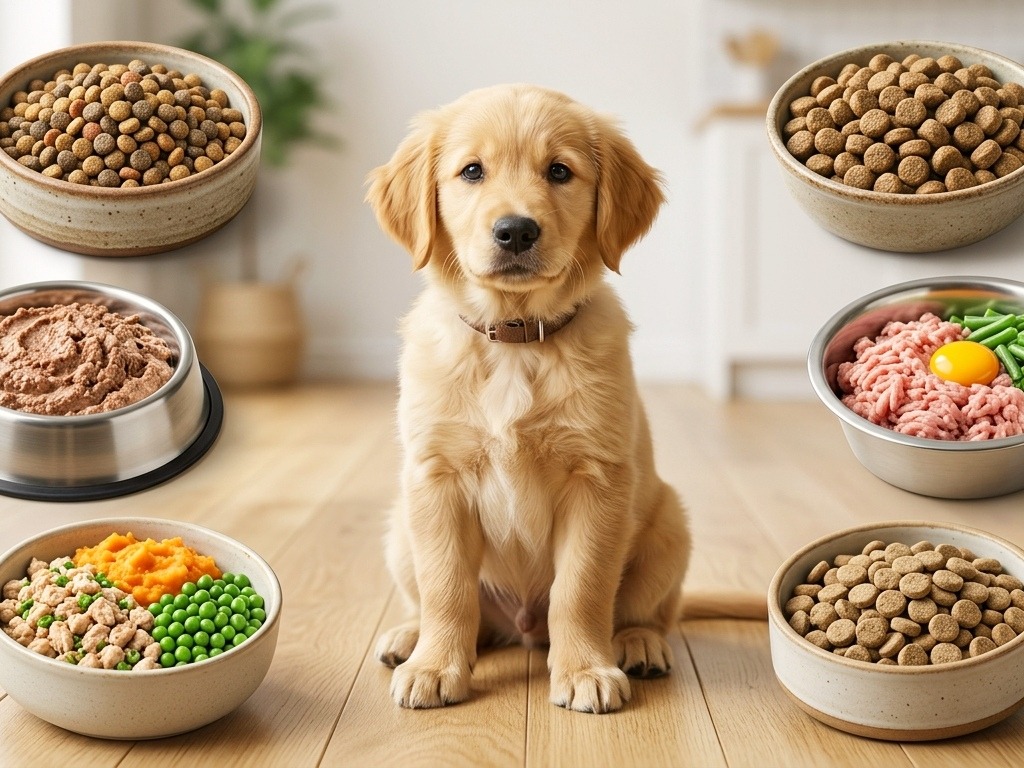
There is a variety of puppy foods available. Dry kibble is convenient; wet is for finicky eaters. Fresh and freeze-dried are of interest to owners who want less processing. Feeding raw is still controversial and needs careful planning.
There is no style to fit all puppies. There is no perfect option; it depends on lifestyle, budget, veterinary guidance, and your dog’s preferences. Knowing each category helps to make smarter decisions rather than impulsive buying.
Dry Puppy Food
These minimally processed options are attractive to owners who want to see exactly what’s going into their pet’s bowl and who connect ‘fresh’ with ‘better’.
Wet Puppy Food
Raw diets require careful preparation. The need for professional oversight is relevant in the context of nutritional imbalance and contamination risks.
How to Choose the Best Puppy Food by Breed Size
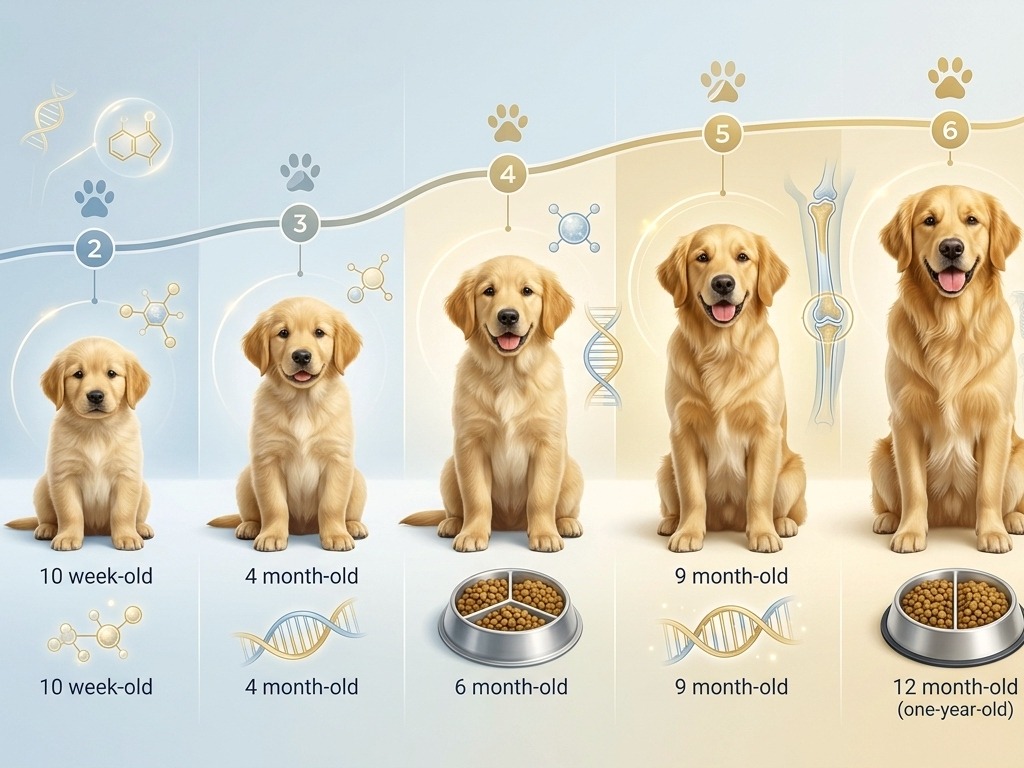
Bread size impact on a puppy’s nutritional needs. A small puppy’s metabolism is extremely fast. While large breeds require controlled growth. Choosing the wrong formulas may create avoidable health concerns.
Selecting the finest puppy food for each breed size helps support healthy growth. It also improves feeding accuracy throughout puppyhood.
Small-Breed Puppy Food
For small breeds, the best puppy food contains calorie-dense formulas designed to meet their high-energy needs. And the kibble is also small in size and easy to chew.
Medium-Breed Puppy Food
The best puppy food for medium breeds has steady energy needs with a controlled nutrient supply.
Large-Breed Puppy Food
The best puppy food for large breeds will be rich in calcium but in controlled amounts to support slow, steady skeletal growth.
How Much Puppy Food Should You Feed?
One question that often comes up is how much food you should feed a puppy. Feeding guidelines vary with age, breed, body condition and activity levels. Package instructions aren’t commandments. Pay close attention to your puppy. Ribs are to be felt but not prominent. If your dog is constantly hungry, too lazy, or gaining too much weight, you might want to adjust your approach. Monitoring makes feeding an informed practice, not a guess, consistently.
| Puppy Age | Meals Per Day |
| 6–12 Weeks | 4 Meals |
| 3–6 Months | 3 Meals |
| 6–12 Months | 2 Meals |
Portion Sizes by Age and Weight
Age determines the basic structure, while body condition refines the details.
Signs of Overfeeding and Underfeeding
Weight changes, fluctuations in energy levels and fecal quality provide valuable clues.
Puppy Feeding Schedule by Age
A structured puppy feeding schedule creates regularity and helps digestive comfort. Small puppies grow better with frequent feeding in small portions because their stomachs are small and energy demands remain high. As puppies mature, meal frequency gradually decreases. A practical puppy feeding guide helps to avoid abrupt transitions and encourages healthy habits.
6–12 Weeks
Four meals daily sustain rapid development.
3–6 Months
Three meals help accommodate changing growth patterns.
6–12 Months
Two meals often become sufficient as maturity approaches.
Can Puppies Eat Homemade Food?
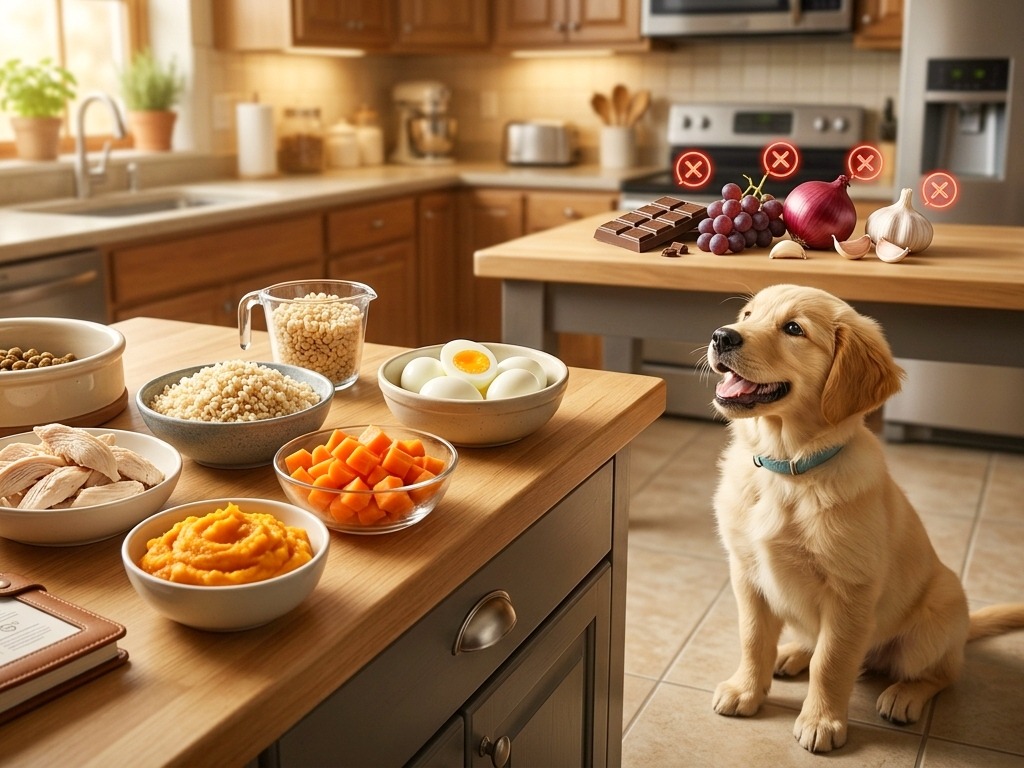
Homemade diets attract owners who want to control ingredients. Well-formulated meals can offer variety and freshness. But without expertise, nutritional gaps are easy.
Some are nourishing; others are serious dangers. Knowing the difference keeps the curious puppy out of trouble. Made at home, feeding can be customized. But getting complete nutrition needs careful formulation. A balanced diet often contains cooked lean meats, rice, eggs, carrots and pumpkin. Never give your puppy chocolate, grapes, raisins, onions, garlic, xylitol, alcohol or cooked bones.
FAQs
What is the best food to feed a puppy?
In order for the puppy to grow properly and develop, it is advisable to feed the puppy with good puppy food that is approved by AAFCO. Some of the good diets for puppies are those which contain high-quality animal proteins and should be formulated to meet the right nutritional value requirements of the puppy, depending on its age and overall health.
What is the best dog food for pancreatitis?
For dogs that are diagnosed with Pancreatitis, the best type of food to provide is a low-fat diet with easy-to-utilize sources of protein. The use of either a veterinary-prescribed diet or a commercially available low-fat diet (that has been vetted) is generally considered the safest way to feed your dog.
Can a 2 month old puppy eat rice?
A two-month-old puppy can eat plain, cooked rice, but as a supplemental food source to a regular puppy diet. In general, puppies require a specific nutrient profile based on their developmental age and stage, and rice should not be considered a full replacement for a complete puppy diet.
Conclusion
Choosing the right puppy food is one of the most important decisions you will make in your puppy’s first few months. Well-balanced puppy nutrition formulas are tailored to your puppy’s age and specific needs. Whatever you decide, the best dry puppy food, the best wet puppy food, or something else, consistency and quality are the most important. A good puppy diet will ensure they have healthy bones, sharp minds, strong immunity and consistent growth.
