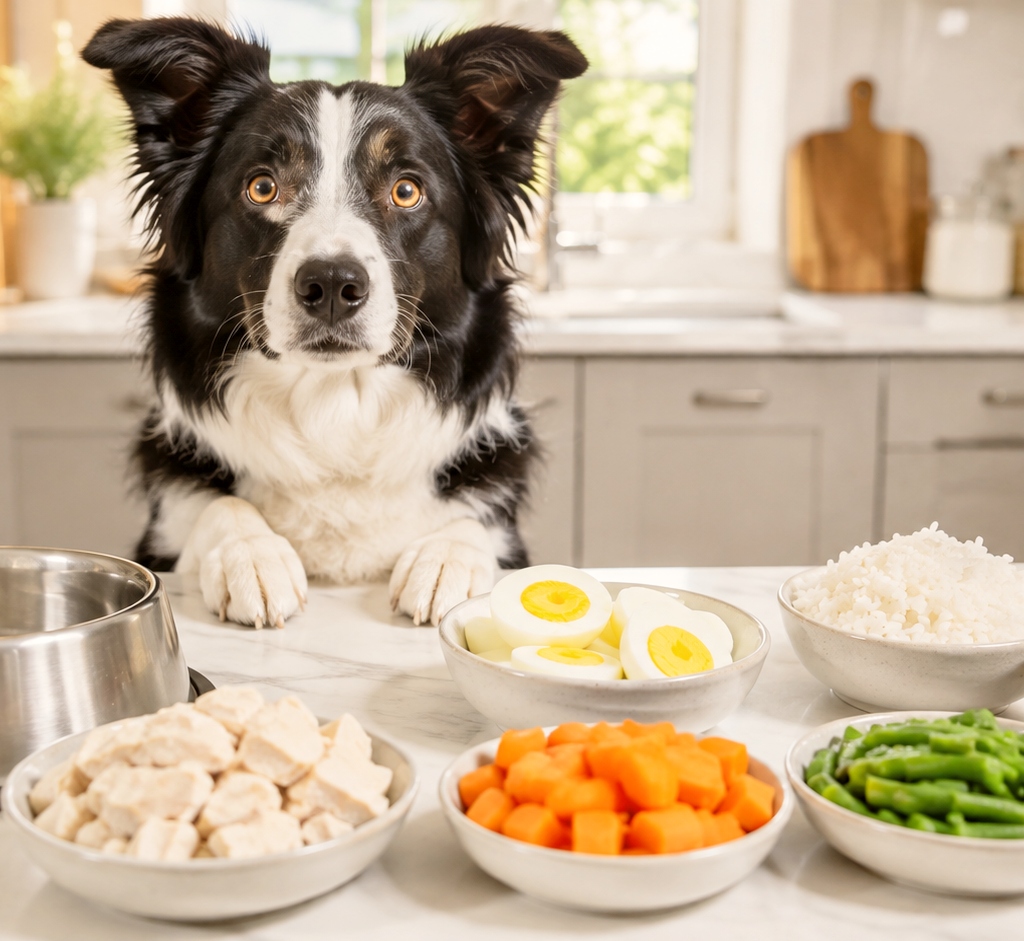
Dogs enjoy food treats just like humans. While most dogs can have occasional treats, sometimes eating them can cause gastrointestinal issues. If owners share human food with their dogs, it’s important to know which foods are better for their pups. In this blog, you can find human foods that dogs can enjoy and those they should avoid. This article covers all aspects of human food for dogs, including safe and unsafe human food, their health benefits, proper feeding, toxic foods, and the best choices for every stage of your pup.
Human Foods Dogs Can Eat
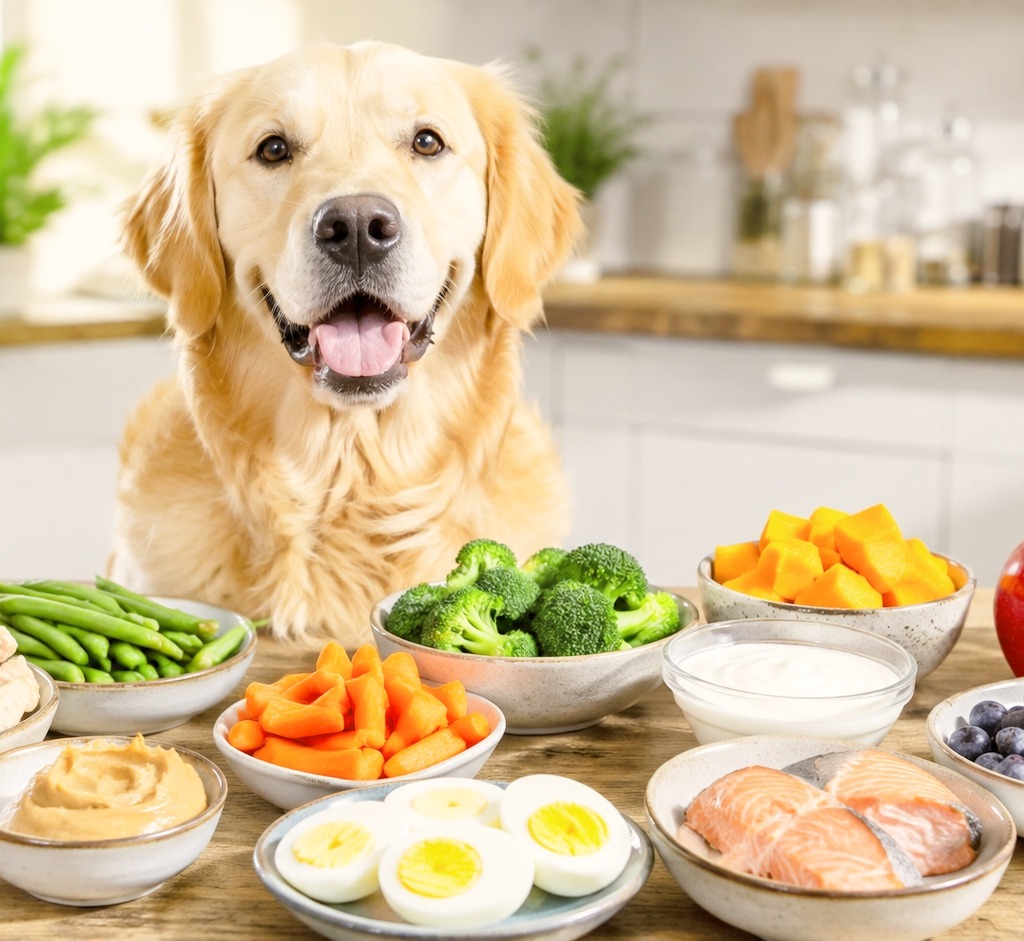
Several foods are safe for dogs if prepared properly and given in moderation. These foods work as treats, but the owner should never replace a complete dog food diet. Some foods that can be given to dogs are discussed here with their pros and cons.
Bread
Small amounts of bread won’t disturb your dog’s diet if it contains no spices and no raisins. However, keep in mind it does not give any health benefits. There are no nutritional benefits, and it can significantly increase carbohydrate and calorie intake, just as it does in people. Owners should give homemade bread over market-bought because it’s a better option.
Peanuts (unsalted) and peanut butter
Peanuts are safe for dogs to eat, but they contain good protein and fat. Too much fat can cause issues like obesity or pancreatitis, but keep in mind peanuts should be given to your dog in moderation. You can also give peanut butter to your dog because it contains vitamins B and E, and also fiber, which are best for cardiovascular and digestive health. Before giving peanut butter, make sure that it doesn’t have xylitol, a sugar substitute.
Eggs and Dairy
A hard-boiled or scrambled egg works as a tasty snack for your dog. Eggs contain protein, riboflavin, selenium, and vitamin D, which helps to improve your dog’s health. A little milk is fine for your pet, but some dogs are lactose intolerant. If you observe that your dog is lactose intolerant, they may experience vomiting, stomach pain, diarrhea, gas, or lack of appetite due to nausea. Dogs can eat yogurt, but pets with lactose intolerance must avoid this food. Cheese can also be a good treat if your dog does not suffer from lactose intolerance. Small amounts of cheese make a good occasional treat if your dog isn’t lactose intolerant. The American Kennel Club recommends mozzarella and cottage cheese.
Cashews
Cashews are good for dogs, but only give a few at a time. They contain calcium, magnesium, protein, and antioxidants. However, cashews contain less fat than other nuts; but if the owner gives them in very large amounts, it can lead to weight gain. A few cashews become a good treat for your dog only if they are unsalted.
Vegetables
Some of the safe vegetables that dogs can eat.
- Carrots (cooked)
- Broccoli
- Green Beans (cooked)
- Zucchini
- Brussels Sprouts
- Cabbage
- Celery (strings removed)
- Cauliflower
- Peas (cooked)
- Sweet Potatoes (plain, cooked, and skinless)
- Potatoes (plain, roasted, and skinless)
- Spinach
- Corn
According to PetMD, cauliflower, broccoli, peas, Brussels sprouts, and cabbage can cause gastrointestinal issues.
Fruit
Some fruits that you can give your best friend.
- Bananas
- Apples
- Watermelon (remove the rind and seeds before serving)
- Pumpkin (plain, cooked)
- Pears (remove the seeds and core before serving)
- Pineapples (remove the tough outer rind and core before serving)
- Berries
- Mangoes (remove the pit and peel before serving)
- Kiwis (peel before serving)
- Cantaloupes (remove the rind and seeds before serving)
- Peaches (remove the pit before serving)
- Oranges (peel before serving and remove any seeds)
Fish
Fish have fats and amino acids that help to enhance your dog’s health. Salmon and sardines are good types because salmon contain vitamins and protein. They have soft bones for extra calcium. Except for sardines, pick out all the tiny bones, which is tedious but necessary. Never feed your pet undercooked fish, and limit your dog’s fish intake to twice a week.
Proteins
Your dog’s food is packed with protein, but some prefer protein over vegetables or fruits. There are many options to give them. You have to remove any bones and excess fat. First, cook it without using a lot of oil or butter.
- Turkey
- Lean pork
- Eggs
- Chicken
- Fish
- Lean beef
- Natural peanut butter
Honey
Honey contains natural nutrients, such as calcium, antioxidants, vitamin A, magnesium, potassium, and copper. Feeding dogs small amounts of honey may help with allergies by introducing small amounts of pollen to their systems.
Pork and Quinoa
According to the AKC, pork is a digestible protein that contains amino acids, though it has more calories per pound than other meats. There is a minimal chance of causing an allergic reaction in some dogs compared to other proteins. The strong nutritional profile of quinoa makes it a healthy alternative to corn, wheat, and soy often used to make kibble.
Wheat or Grains
Grains like wheat and corn are best sources of protein, fiber, and essential fatty acids. If your dog suffers from allergies, it is best to avoid grains, but in the end it depends on your dog. The owner should ask the vet for a recommendation.
Human Foods Dogs Can’t Eat Safely

Many foods are not safe for dogs, such as garlic, ice cream, almonds, and cinnamon. Their explanation are given as
Garlic
Garlic belongs to the Allium family along with onions, leeks, and chives, but it’s five times more toxic to dogs than the rest of the Allium plants. Garlic can cause anaemia in dogs, resulting in symptoms like pale gums, rapid heart rate, weakness, and collapse. Symptoms of garlic and onion poisoning can be delayed, so if you suspect your dog has eaten some, keep an eye on them for a few days, not just right after they’ve eaten.
Ice Cream
Ice cream is full of sugar, so it’s best not to share with your dog. Some dogs also have a lactose intolerance. Or freeze chunks of strawberries, raspberries, apples, or pineapples to give your dog as a sweet, icy treat instead of milk altogether.
Cinamon
Cinnamon is not very toxic to dogs but should only be given in small amounts. Cinnamon essential oil is much more concentrated and can be more dangerous than ground cinnamon. Based on guidance reviewed by Barri J. Morrison, DVM (PetMD), dogs can eat cinnamon in small amounts, but should avoid concentrated forms such as essential oils.
Almonds
Almonds are not toxic to dogs, but they are not considered safe because dogs have trouble digesting them. The high fat content of almonds can cause vomiting, diarrhoea, stomach upset, or even pancreatitis in dogs.
Guidelines for Feeding Human Food to Dogs h2
- Introduce new foods slowly so you can observe the dog for any stomach upset or an allergic reaction.
- Choose dog-safe foods such as lean proteins, plain fruits and vegetables, and healthy fats.
- Avoid toxic foods for dogs such as chocolate, grapes, onions, garlic, the artificial sweetener xylitol, and alcohol.
- Portion control is important, as treats and human foods should only account for 10 percent of your dog’s daily calories.
- Serve foods plain and unseasoned. NO salt, sugar, butter, oils or spices added.
- Remove items that could cause choking, such as bones, pits, seeds, shells and skins.
- To reduce the bacterial risk, cook meats, eggs and some vegetables thoroughly.
FAQs
What human food can I give my dog daily?
- Plain cooked chicken or turkey
- Cooked eggs
- Carrots, green beans, or pumpkin
- Limit to 10% of daily calories
What is the healthiest food to feed a dog?
- Complete and balanced dog food
- Age-appropriate diet
- Fresh water daily
What is a dog’s favorite human food?
- Cooked chicken
- Turkey
- Lean beef
- Eggs
What human food can I feed my dog if I don’t have dog food?
- Cooked chicken or turkey
- Cooked rice
- Boiled eggs
- Plain pumpkin
- Cooked carrots
Conclusion
In this guide, you’ll learn what you need to know about human foods for dogs: safe foods, dangerous foods, how to feed them, nutritional benefits, and much more. The data is taken from reputable veterinary sources, including the American Kennel Club (AKC), PetMD, and other veterinary-reviewed sources. Whenever you introduce a new food into your dog’s diet, do it in moderation, and if you have any concerns about your dog’s health or diet, check with your veterinarian. This guide is founded by Dogdaycare experts with accurate information. For further information about dogs, explore our other articles.
