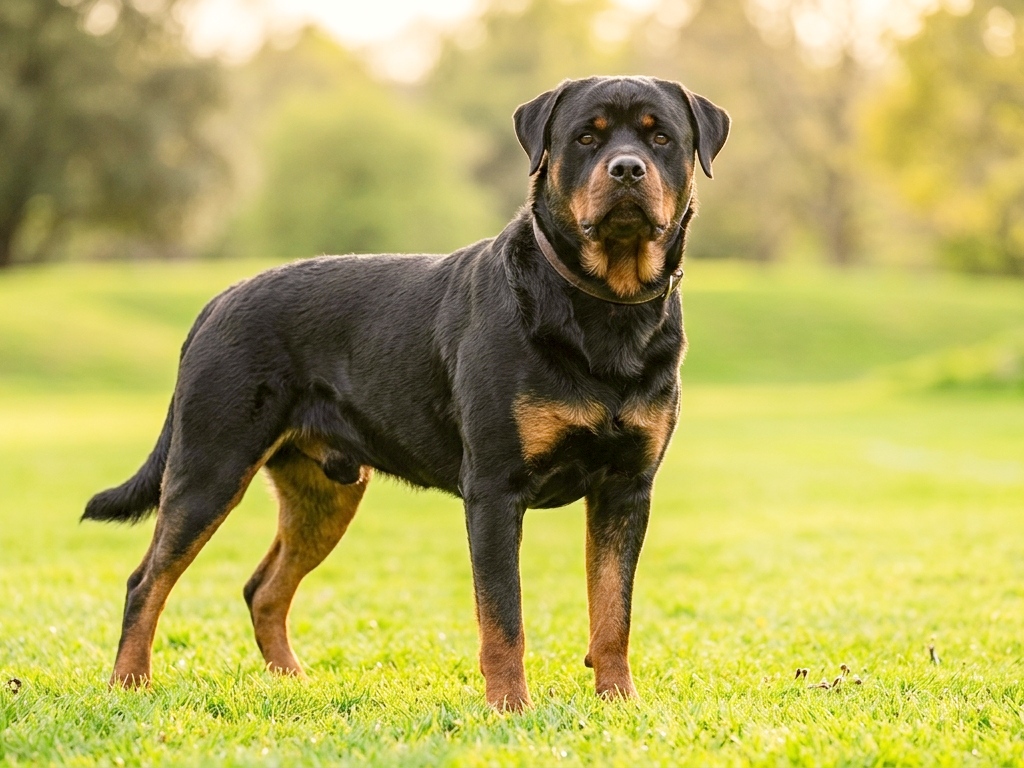
The Rottweiler is a powerful working dog, descended from the mastiffs of the Roman legions. Within the family circle, the Rottie is a gentle playmate and protector, looking upon the outside world with a self-assured aloofness. A male Rottweiler will stand anywhere from 24 to 27 muscular inches at the shoulder; females run a little smaller and lighter. The smart rust markings on the glistening short black coat complete the picture of imposing strength. The Rottie’s powerfully muscled hindquarters propel its effortless trot. A well-bred and raised Rottie will be calm and confident, courageous but not over-aggressive. The aloofness world-class guardians present to outsiders belies the playfulness and downright silliness that endeared Rotties to their loved ones.
History and Origin

The Rottweiler is a strong breed of working dog with a history that dates back to the Roman Empire. Its ancestors were driving dogs that walked Roman legions, and later settled in Rottweil, Germany, where the breed took its name.
Rottweilers gradually became guard dogs, cattle drovers, draft dogs, police dogs, and search-and-rescue dogs. The breed has had many roles throughout its history, but since the first German breed standard was published in 1901, its appearance and temperament have not changed significantly.
Rottweiler characteristics
Physical appearance
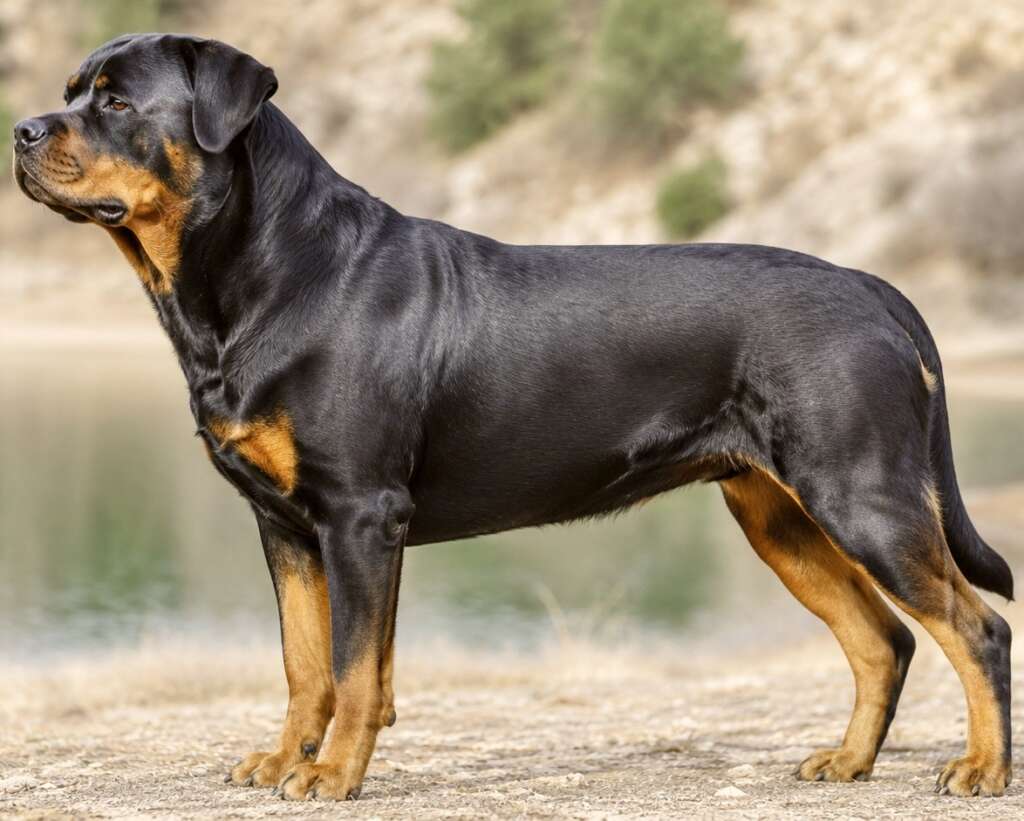
The average weight of a Rottweiler is 80 to 120 pounds, and the height is 22 to 27 inches. They have broad, square muzzles and somewhat loose lips, which can make members of this breed a bit drooly. The coat is shiny black with rust markings on the legs, chest, and face.
Personality
Well-socialized Rottweilers are good with people and other dogs. However, males of the breed can be a little dominant and aggressive. These dogs can cause serious damage, so they need a smart owner who would train them properly and socialise them enough.
Lifespan
Rottweilers tend to live shorter lives than some other dog breeds in the same weight category that can live up to 15 years. The average life span of a purebred Rottweiler is 9 years. Female Rotties live an average of 9.5 years and live about 10 months longer than the males on average.
Rottweiler health issues

Rottweilers can suffer from health problems and disorders because they have a greater chance of disease than other breeds. So it’s necessary to have your vet properly check them. Some of the diseases are discussed here.
Elbow and Hip Dysplasia: Elbow dysplasia is a malformation of the elbow joint in which Rottweilers have difficulty rising and limping. Hip dysplasia occurs when the thighbone doesn’t fit into the hip joint, which can cause arthritis. Its symptoms are similar to elbow dysplasia, like hip pain, difficulty rising, hip joint pain, or limping.
Osteochondrosis Dissecans (OCD): It’s a disease that affects cartilage, especially in growing dogs.
Bone Cancer (Osteosarcoma): This disease mostly affects older dogs. Its symptoms include lameness, lethargy, and bone swelling.
Von Willebrand Disease: This is a hereditary disease. It affects the clotting ability and causes prolonged bleeding.
Eye disorders: Entropion and Ectropion are conditions caused by the lid turning inward or outward, respectively. It is often painful and needs surgical correction. Other common eye conditions in Rottweilers include Progressive Retinal Atrophy and Cataracts.
Gastric Torsion Volvulus (GDV ): This happens when the stomach is full of food and gas and turns over inside the abdomen. This is more common in deep-chested breeds of dog that have taken a large meal and exercised afterwards. Its symptoms are gagging without vomiting, discomfort, arched back, distended abdomen, and restlessness.
Care Guide
Training
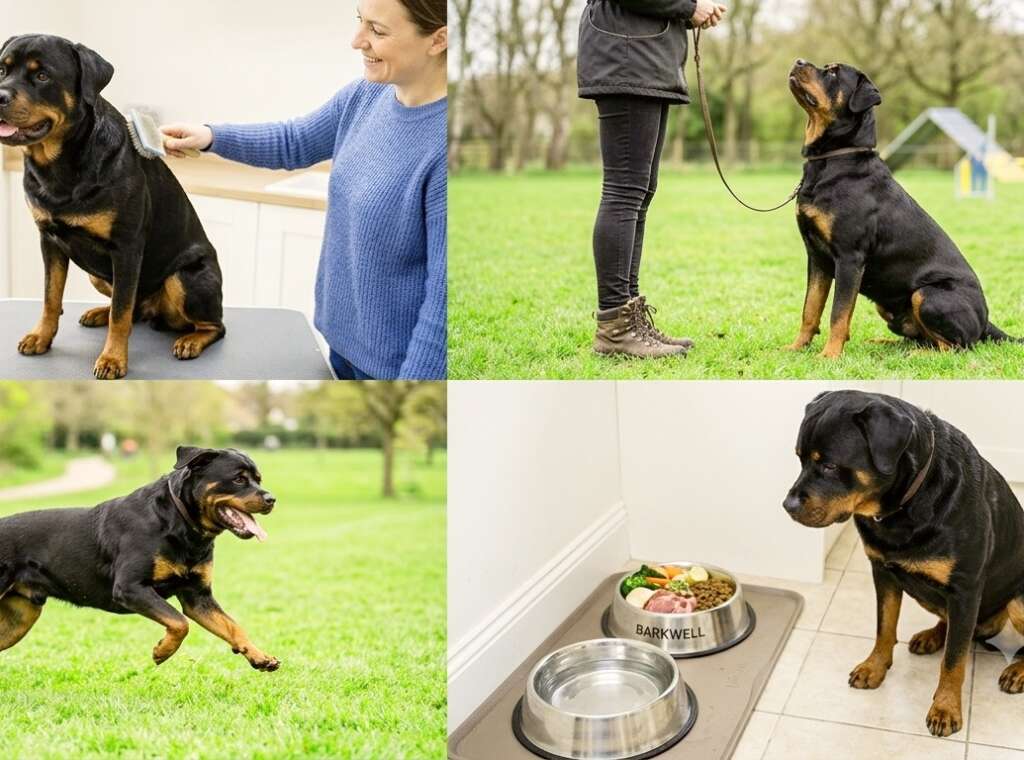
The Rottweiler breed is a powerful, active working dog; as such, it needs an experienced owner to ensure it gets all the socialisation and training. With the right owner, they can be trained to a very high standard, excel in canine sports or bloom with a job to do – in other words, be an unbeatable dog. But the amount of work required to keep them mentally and physically stimulated and adequately socialised means they are high-maintenance dogs for expert owners.
Grooming
Rottweilers have a medium-length, straight, flat coat. Rotties shed at a moderate rate throughout the year, except in the spring and fall when they shed more heavily. Their nails should be trimmed once a week and their teeth brushed regularly.
Exercise
Rottweilers need plenty of exercise and training to keep them happy and healthy. They like long walks in the countryside. A well-trained and socialised Rottweiler will generally stay very close to their owner. Before letting your Rottweiler off-leash, make sure he is well socialised and good with other dogs, and supervise all interactions with other pets.
Nutritional Requirements
| Nutrient | Recommended Amount | Why It Matters for Rottweilers | Best Food Sources |
| Protein | Puppies: 26–30% (dry matter) • Adults: 22–26% | Supports muscle growth, tissue repair, immune function, and maintains lean body mass. | Chicken, turkey, beef, lamb, fish, eggs |
| Fat | Puppies: 14–18% • Adults: 10–15% | Provides concentrated energy and supports healthy skin, coat, and brain function. | Salmon oil, chicken fat, sardines, flaxseed |
| Carbohydrates | 30–50% of diet (digestible sources) | Supplies energy and dietary fiber. | Brown rice, oats, sweet potatoes, pumpkin |
| Fiber | 2–5% | Promotes healthy digestion, improves stool quality, and helps maintain a healthy weight. | Pumpkin, beet pulp, carrots, green beans |
| Calcium | Puppies: 1.2–1.8% • Adults: 0.5–1.2% | Essential for strong bones and joints. | Balanced commercial diets, dairy (in moderation), fish with edible bones |
| Phosphorus | Puppies: 1.0–1.6% • Adults: 0.4–1.0% | Works with calcium to build healthy bones and teeth. | Meat, fish, poultry |
| Calcium-to-Phosphorus Ratio | 1.2:1 to 1.4:1 | Maintains proper skeletal development and mineral balance. | Achieved through complete and balanced dog food |
| Omega-3 Fatty Acids (EPA & DHA) | 0.1–0.3% of dry matter | Supports joint health, heart function, skin condition, and helps reduce inflammation. | Salmon, sardines, fish oil |
| Omega-6 Fatty Acids | 1–3% | Helps maintain healthy skin, coat, and immune function. | Chicken fat, sunflower oil |
| Glucosamine & Chondroitin | As recommended by your veterinarian | May help support cartilage health and joint mobility, especially in aging or highly active Rottweilers. | Joint-support diets, green-lipped mussels, supplements |
| Water | 50–70 mL per kg body weight daily (minimum) | Prevents dehydration and supports normal kidney function, digestion, and temperature regulation. | Fresh, clean drinking water available at all times |
| Calories | Based on age, weight, activity level, and body condition | Overfeeding increases the risk of obesity and joint disease, while underfeeding may affect growth and muscle maintenance. | Portion-controlled complete and balanced meals |
FAQs
Is the Rottweiler a good family dog?
- Yes, with proper training.
- Loyal and protective.
- Good with respectful children.
What are the weaknesses of a Rottweiler?
- Needs early socialization.
- Requires daily exercise.
- Prone to joint issues.
Are Rottweilers difficult to own?
- Needs an experienced owner.
- Requires consistent training.
- Thrives with routine.
Is it better to get a boy or girl Rottweiler?
- Males are larger.
- Females are easier to manage.
- Training matters most.
Conclusion
This guide includes all the necessary information you should know about the Rottweiler breed, including history, physical appearance, personality traits, diseases that commonly affect this breed, training, grooming, exercising, and nutrition requirements. If you are looking for information about this particular dog breed, this is the guide for you.
