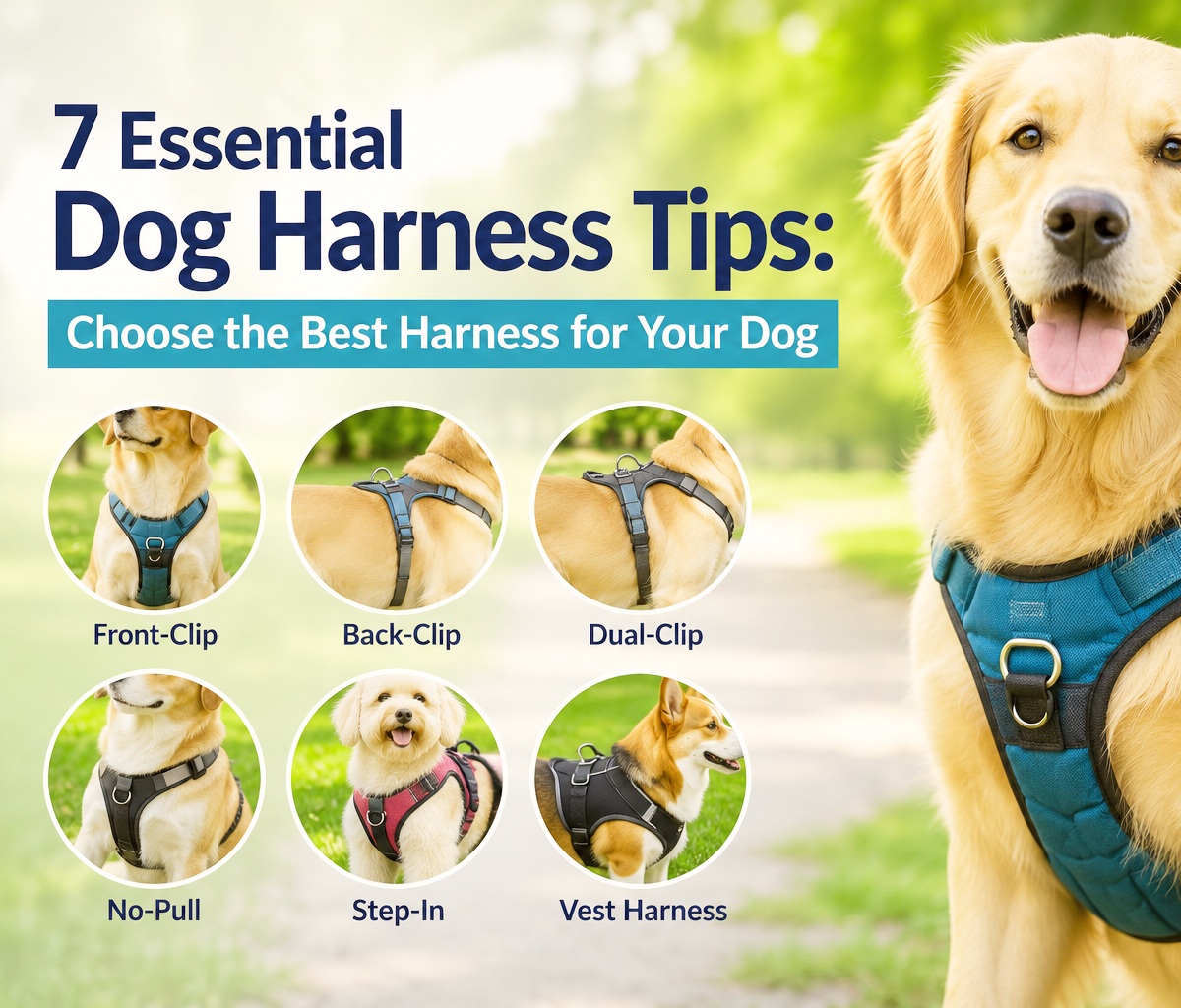
Dog harnesses have loops around the dog’s chest and the widest part of their neck. In addition to dog security, a harness applies less pressure to the neck than a dog collar. The use of a harness can be beneficial for senior dogs, puppies, and dogs with a broad head and neck.
If your dog does not fit into these categories, there are many reasons to purchase a dog harness. With many options, you can be confused about how to choose a dog harness. Read this guide, which dog daycare experts designed to help owners choose the best dog harness for their pet. In this article, everything is explained that every pet owner needs to know about dog harnesses, including their benefits, needs, problems, and solutions.
Types of Dog Harnesses Explained
Front-Clip Harness
There are advantages and disadvantages of harness clips, so in this case, front-clip harnesses are the best choice if your dog tends to pull. As your dog moves forward, it pulls them back towards the person who holds the leash. But if your dog already wears a harness, it may be difficult to attach the leash because the clip is under the dog’s chest.
Back-Clip Harness
For well-trained dogs, a back-clip harness is the best choice. When the dog wears a harness, the clip is located in the middle of the dog’s shoulder blades. One of the biggest advantages of back-clip harnesses is that the owner can easily clip the leash for the walk.
Dual-Clip Harness
Another type is a dual-clip harness; it has two clips, one located underneath and the other present on the top. Both clips are good when the owner teaches the dog how to use the harness. The owner starts clipping the leash to the front for control of the dog.
No-Pull Harness
A no-pull harness is an alternative to the front-clip harness; in other words, we say that there is a variation in a front-clip harness. The no-pull harness contains a D-shaped ring at the front. When your dog starts to pull, the D-ring constricts the harness a little bit and stops the dog from pulling. These harnesses are beneficial for dogs that are larger or stronger than the person walking them. They are also helpful for people pushing a stroller or those with mobility issues.
H3: Step-In Harness
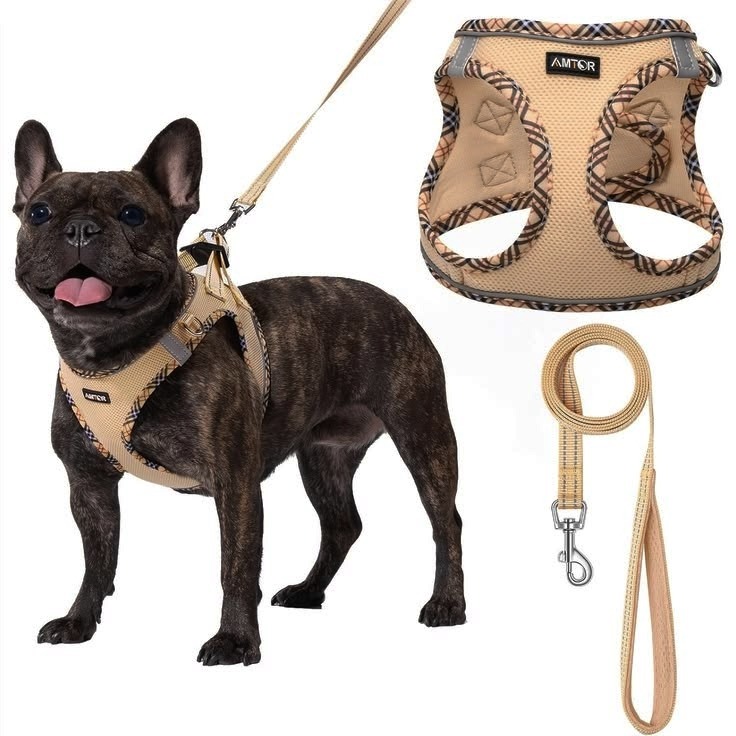
A step-in harness is among the easiest harnesses to use. Your dog just goes through the two leg holes, and the harness goes over the back instead of over the head. It is a good option for dogs who get nervous when something is put over their face. Because the pressure is distributed across the chest rather than the neck, they are comfortable for puppies, small breeds, senior dogs, and dogs with sensitive necks. But it might not provide enough control for dogs that pull hard on leash.
Best for: Puppies, small dogs, senior dogs, and easy daily walks.
Vest Harness
A vest harness has a soft, padded chest panel that makes walks more comfortable for your dog. It sits comfortably around the chest, spreading pressure evenly and helping to relieve neck strain when your dog is on a leash. A vest harness is a common option for dog owners because of the comfort it offers for everyday wear and the secure fit it provides. It works particularly well for puppies, small breeds, senior dogs, and dogs with sensitive necks. Just be sure the harness fits well so your dog can move freely without rubbing or discomfort.
Good for: Puppies, small dogs, senior dogs, and daily walks.
H2: Dog Harness vs. Dog Collar
A dog that is fully leash trained and does not pull on the leash can be walked safely on a collar. A head halter or a well-fitting body harness is a safer alternative to a collar for walking, as dogs who pull can injure their necks. If your dog is an escape artist, use a collar that is backed up (connected) to a body harness in case he can slip out of either. For these situations, carabiners or a safety clip from the harness to the collar are the best.
Puppies should be walked in well-fitting harnesses that allow full range of motion, to protect their joints as they grow. Just be sure to get a very adjustable harness for your puppy and be prepared to replace it when it is too.
How to Clean and Maintain a Dog Harness
It is a good idea to regularly inspect and clean the closures, whether they are made of Velcro, plastic, or metal. Check the hardware for cracks or any fraying or damage to the fabric. Make sure the Velcro is securely fastened, as fur and other materials can get caught in the hooks and loops, compromising the security of the harness.
Harnesses, like any other dog gear, can get dirty and smelly with use, so it’s important to keep them clean — especially if your dog enjoys swimming or rolling around in the mud. The method of cleaning will depend on the material. Wipe the leather with a damp cloth to break up dirt. For a cheap cleaning solution, mix water, vinegar, and baby soap to clean and condition the leather.
Best Dog Harnesses for Different Needs

| Need | Recommended Harness Type | Key Features | Why It’s the Best Choice |
| Best for Puppies | Step-In or Soft Vest Harness | Lightweight, soft padding, adjustable straps | Gentle on a puppy’s growing body and comfortable for training. |
| Best for Small Dogs | Vest Harness | Padded chest, breathable fabric, secure buckles | Reduces neck pressure and improves comfort. |
| Best for Large Dogs | Dual-Clip Harness | Strong buckles, reinforced stitching, adjustable straps | Offers better control and durability. |
| Best for Pulling Dogs | Front-Clip or No-Pull Harness | Front leash attachment, secure fit | Helps reduce pulling and improves leash control. |
| Best for Hiking | Adventure Harness | Durable material, handle, reflective trim | Built for outdoor activities and rough trails. |
| Best for Running | Lightweight Back-Clip Harness | Breathable fabric, flexible fit, reflective details | Allows natural movement during runs. |
| Best for Senior Dogs | Support Harness | Soft padding, lifting handle, adjustable straps | Provides extra support for older dogs. |
How to Measure Your Dog for a Harness
A soft tape measure is great for measuring your dog’s size. But if you don’t have one, you can use a piece of string or a flexible dog leash, then measure the string against a tape measure or ruler. To measure your dog’s girth, take a string or a measuring tape and wrap it around the widest part of your dog’s chest. The tape measure or string should be level around their chest, behind their front legs.
Neck Measurement: Measure around the base of your dog’s neck where the harness will sit.
FAQS
What Kind of Dog Harness Is Best?
- Y-shaped harness
- Dual-clip design
- Even chest pressure
- Protects the neck
- Allows natural movement
Why Do Dog Trainers Not Recommend Harnesses?
- Poor back-clip designs
- Can encourage pulling
- Wrong fit causes discomfort
- Training is still essential
- Front-clip harnesses are preferred
What Dog Harness Do Vets Recommend?
- Y-shaped harness
- Soft padded straps
- Fully adjustable fit
- Reduces neck pressure
- Suitable for puppies and seniors
What Words Do Dogs Hear Best?
- Sit
- Stay
- Come
- Down
- Heel
- Wait
- Leave it
- Drop it
- Good
- Okay
Conclusion
In this article on dog harness, the DogDaycare team explains everything clearly, from their types to its measurements. If you want to get information about dog harnesses, their uses, and their types, this guide is specially for you.
