
Dog flea bites can turn a happy, playful companion into an uncomfortable and restless pet in a hurry. These tiny blood-sucking parasites are found all over the world, but many owners are unaware of the problem until the scratching has become serious and the skin is irritated. If left untreated, a minor flea infestation can rapidly spread in your home and affect your dog’s health.
Recognising the early warning signs, knowing how flea bites can progress, and taking action quickly can help avoid painful complications and long-term discomfort. In this guide, we’ll look at how to identify flea bites on dogs, what causes them, treatment options, how to prevent future infestations, and when it’s time to seek professional veterinary care for your dog.
What Are Dog Flea Bites?
Dog flea bites are small skin injuries caused by tiny, blood-sucking parasites that survive by feeding on your dog’s blood. The flea injects saliva into the skin before it feeds. This saliva often irritates the skin or leads your dog to scratch almost immediately. Some dogs have only mild redness as a symptom. Others have a much worse reaction, and the dog is extremely uncomfortable. This is because the dog’s immune system reacts more strongly to flea saliva.
These bites are rarely a simple nuisance for long. Continued scratching can damage the skin barrier and increase the risk of skin problems, itching, and even skin infection. Puppies, senior dogs, and pets with pre-existing dog allergies are often more sensitive than healthy adults. Finding and treating fleas early is one of the most effective and important ways to prevent and control fleas in the long term.
What Do Flea Bites Look Like on Dogs?
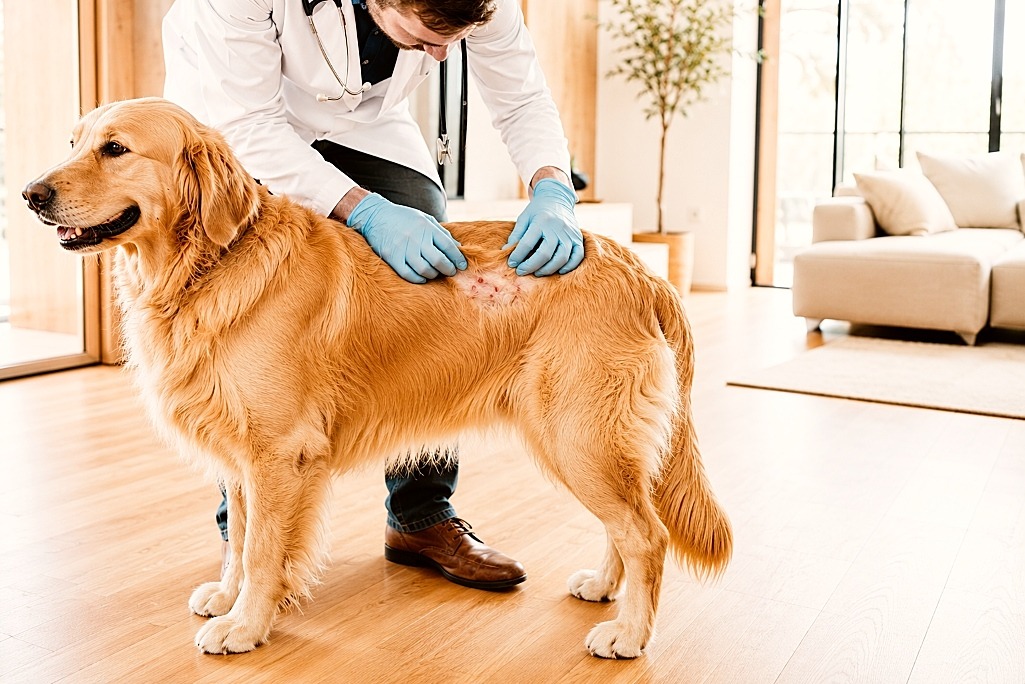
New flea bites on dogs usually look like small red bumps with a bit of surrounding redness. Unlike a single bite from an insect, fleas tend to bite several times close together. This means the bites may occur in little groups rather than as single bites. You may also notice your dog licking or nibbling the same spot over and over as the itching starts almost immediately.
All dogs are different, but the appearance often changes over time. Flea bite scabs, dry patches, or skin inflammation can result from repeated rubbing. Routine pet grooming is especially helpful for dogs with darker coats who may be more likely to hide these early signs under a thick coat. Check under the coat once a week to spot changes before they become serious problems.
Common Signs That Indicate Flea Bites
One of the early signs is incessant, intense scratching that appears to come out of nowhere. Many owners also see tiny black specks called flea dirt, which is digested blood that feeding fleas leave behind. If you’ve been wondering how to tell if your dog has flea bites, combining these signs with visible bite marks gives you one of the clearest answers.
Areas of the Body Where Flea Bites Commonly Appear
Fleas prefer warm, protected areas of the body where the hair is thin. Bites are usually found on the lower back, groin, belly, inner thighs, armpits, around the neck, and often close to the base of the tail. These concealed regions allow adult fleas easy access to the skin and protect them from sunlight and frequent movement. Regularly inspecting these areas makes it far easier to get rid of fleas on dogs before the infestation gets any worse.
Common Signs and Symptoms of Dog Flea Bites
The bites are not always the first thing you notice. Usually, it is your dog’s behaviour that changes first. Constant discomfort may cause a normally calm pet to be restless, chew its coat or wake often at night. Constant irritation over time can cause hair loss, flaky skin and a noticeable dog skin rash. Fleas are the hidden cause of many owners asking Why is my dog scratching so much?
Symptoms vary depending on the number of fleas. Some pets develop only mild redness, but others develop extensive irritation after only a few bites. One common allergy in dogs is flea saliva allergy, which can cause severe itching and inflamed skin (flea allergy dermatitis). If you don’t treat it, continued scratching can break the skin, and open sores can lead to infected flea bites and other dog infection concerns. Knowing the symptoms of flea bites on dogs allows you to seek treatment before complications set in.
What Causes Flea Bites and How Do Dogs Get Fleas?

Fleas don’t just pop up out of nowhere. They are transmitted by direct contact with infected animals or contaminated environments. Even a spotless house won’t protect you from being exposed because these little dog parasites are surprisingly good travellers. The first step to effectively preventing fleas on dogs is to understand how dogs get fleas.
They are commonly found outdoors, but can also infest indoor environments. Fleas hide in fabrics, cracks in the floor, and shady spots waiting for a passing animal to jump on. Good hygiene for your pet and regular inspections will reduce the chance of a full-blown infestation, but keep in mind that prevention is most effective when combined with a reliable flea treatment for pets.
How Dogs Pick Up Fleas
Dogs can pick up fleas at parks, kennels, grooming facilities, or in homes with untreated pets. Animals such as squirrels, rabbits, and stray animals also bring fleas into the garden. Once fleas enter your house, they spread to the carpets, furniture, blankets, and bedding. How to clean your house after a flea infestation is just as important as treating your pet.
Successful flea treatment at home requires knowledge of the flea life cycle. Fleas develop from flea eggs to flea larvae, to pupae, and finally to adults. Because immature stages are present in the environment, the problem is rarely solved by simply removing visible fleas. Knowing how to interrupt the flea life cycle means you can kill every stage, instead of chasing fleas that have just hatched every few weeks.
How Veterinarians Diagnose Dog Flea Bites
The first thing a vet does is look at your dog’s skin and coat. They look for bite marks, residual fleas, and signs of flea activity underneath the fur. Your dog’s medical history is also helpful, especially if there have been seasonal outbreaks before.
Diagnosis is by exclusion of other flea bite mimics. In more difficult cases, skin samples may be suggested, or allergy testing may be done before deciding on the most appropriate dog flea medication or natural flea treatment for dogs. Getting the right diagnosis means you’re getting the best flea treatment for dogs, not treating the wrong condition.
How to Treat Dog Flea Bites

If you find fleas early and treat your dog, he’ll heal faster and avoid further irritation. First, select a safe pet flea treatment that’s suitable for your dog’s age and health. If you want to go easy on the pet, an organic flea shampoo can wash away many fleas while soothing the skin. Many owners also ask how to treat dog flea bites, as the itching often continues even after the fleas have been removed.
Calming the skin is as important as removing the parasites.
Aloe vera may help cool irritated areas, and an oatmeal bath for dogs can soothe dryness and discomfort. Other owners dilute apple cider vinegar for dogs, but do not apply it to broken skin. Use a flea comb to remove any remaining insects and to monitor recovery. If you’re wondering how to get rid of flea bites on dogs or how to stop a dog from scratching flea bites, these supportive steps often make a noticeable difference.
Can Dog Flea Bites Lead to Health Problems?
Most dogs respond well to treatment, but untreated infestations can sometimes lead to more significant issues. Severe reactions can cause much discomfort and slow healing. Dog owners frequently ask, ” Can flea bites get infected, as flea bites can make dogs sick. Yes, especially if the skin is broken and bacteria can get in.
Repeat exposure can cause ongoing skin care problems that may require veterinary care. Dogs with flea allergy dermatitis can continue to itch after fleas are gone because their immune system is very reactive.
The resulting infection of the dog’s skin can include bacterial contamination of the affected area. Sometimes, an excessive flea population can the development of anemia in young puppies. But another question arises: whether fleas can cause hair loss in dogs and how long flea bites remain on dogs. The recovery process varies, but in any case, the normal skin is likely to recover within several days from treatment.
| Concern | Why It Matters |
| Persistent itching | May indicate an allergic reaction or ongoing infestation. |
| Open sores | Increases the chance of bacterial infection. |
| Hair thinning | Suggests prolonged irritation or allergy. |
| Lethargy in puppies | May require immediate veterinary assessment. |
How to Prevent Dog Flea Bites
In the long run, prevention is always more cost-effective than treatment. Regular grooming, coat checks, or dog flea prevention make further infestations less probable. Many families combine the use of veterinarian products with cleanliness to create their own natural dog flea prevention approach for the year.
Cleaning is good for pets. Flea Removal And regular vacuuming prevent the growth of hidden particles. Blankets and pet beds are cleaned, reducing the likelihood of infestations. Some families safely use diatomaceous earth in some dry spots as part of natural dog remedies, while others consult their holistic vet for other options. For those who wonder how to kill fleas at home, how to get rid of fleas on dogs, combining pet care with household cleaning produces the most reliable results.
FAQs:
Will dog fleas bite humans?
Yes. While dog fleas prefer feeding on dogs, they can also bite humans if a pet is heavily infested. However, they usually don’t live on human skin and will look for animal hosts instead.
- Dog fleas can bite people.
- Bites often cause small, itchy red bumps.
- Fleas don’t usually stay or reproduce on humans.
- Treat your pet and home to stop further bites.
How do you know if your dog has flea bites?
You can often identify flea bites by checking your dog’s skin and behavior. Early detection helps prevent a larger flea problem.
- Look for small red bumps or scabs.
- Watch for constant scratching, licking, or biting.
- Check for flea dirt in the coat.
- Inspect common areas like the neck, belly, and base of the tail.
What kills fleas instantly?
No single treatment removes every flea immediately, but fast-acting flea products can kill adult fleas within hours. Cleaning your home is also essential to remove eggs and larvae.
- Use a veterinarian-approved flea treatment.
- Bathe your dog with a gentle flea shampoo if recommended.
- Comb the coat with a flea comb.
- Vacuum carpets and wash pet bedding to reduce reinfestation.
Can fleas live in your bed?
Yes. Fleas can hide in your bed, especially if your dog sleeps with you. Although they prefer living on animal hosts, they can survive in bedding, blankets, and mattresses until they find another pet.
- Fleas may hide in sheets, blankets, and mattresses.
- Wash bedding in hot water regularly.
- Vacuum the mattress and surrounding areas.
- Treat your pet and home at the same time to eliminate the infestation.
Conclusion
Catching your dog’s flea bites early can save your pet from days of discomfort. A regular flea prevention program, along with other pet parasite prevention methods and natural flea prevention techniques, will help keep fleas at bay. If your dog’s condition does not improve, contact your veterinarian immediately for a proper diagnosis and treatment.
