
Dog vaccines are the most essential component of dog health care and long-lasting protection. Understanding the value of dog vaccines gives your pet a better chance of avoiding dangerous diseases that can easily spread in everyday settings. These vaccines train your dog’s immune system to fight infections before they become serious.
Your pet gets good dog disease prevention, which helps it live a healthier, longer life. For many owners, vaccines are an easy step, but they are the core of responsible pet care, veterinary care for dogs, and lifelong dog wellness that every dog truly needs.
What Are Dog Vaccines, How Do They Work, and Why Are They Essential?
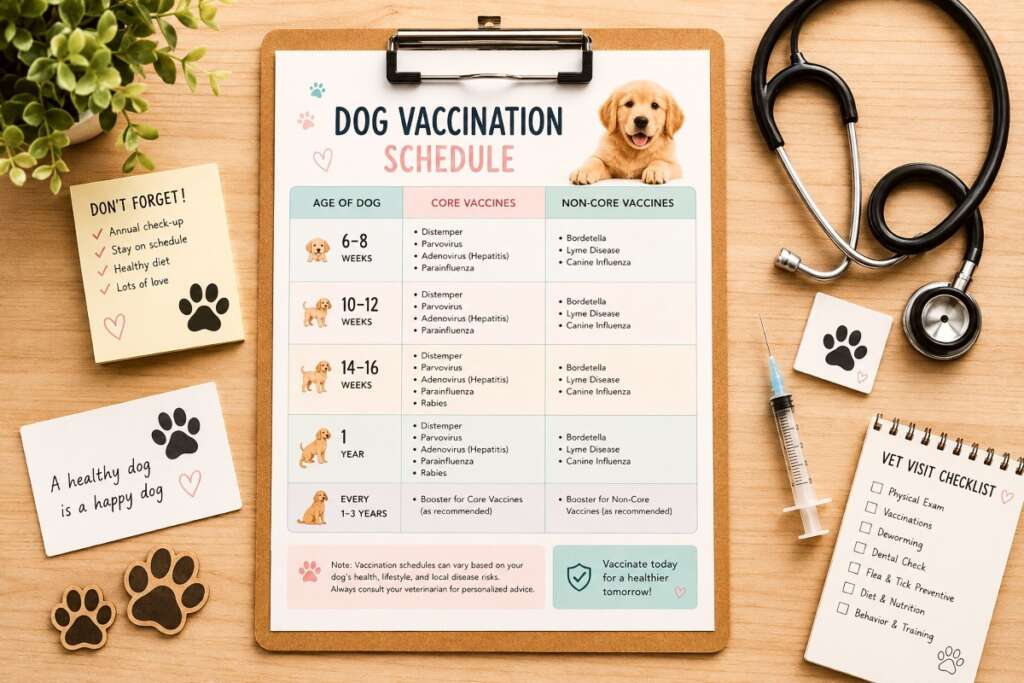
Dog vaccines are small medical methods that teach the body how to fight disease. It enters a secure version of the virus so that your dog learns defense without becoming ill. This process strengthens the animal vaccination reaction and develops long-term protection. Understanding of it is like training before a battle. Your dog’s immune system practices in advance. Then it reacts faster when the real infection happens. This is why canine vaccinations are an important part of protective care for dogs worldwide.
A simple breakdown helps you understand better:
| Vaccine Type | Purpose | Example |
| Core vaccines | Life-saving protection | Rabies, distemper |
| Non-core vaccines | Lifestyle protection | Kennel cough, Lyme |
Veterinarians follow AAHA dog vaccine guidelines and global veterinary vaccine guidelines to ensure safety and timing.
Vaccines are not optional for overall dog health. They protect your pet from diseases that spread through the air, water, soil, and contact. Even a clean house cannot completely block exposure. This is why dog disease protection is always better than treatment. A single infection can lead to expensive treatment and severe pain. Vaccination reduces risk early. Many owners understand that Inside-dwelling pets are secure. However, indoor dog vaccinations are still important. Because germs spread easily through shoes, visitors, and air particles.
Core Dog Vaccines Every Dog Must Have
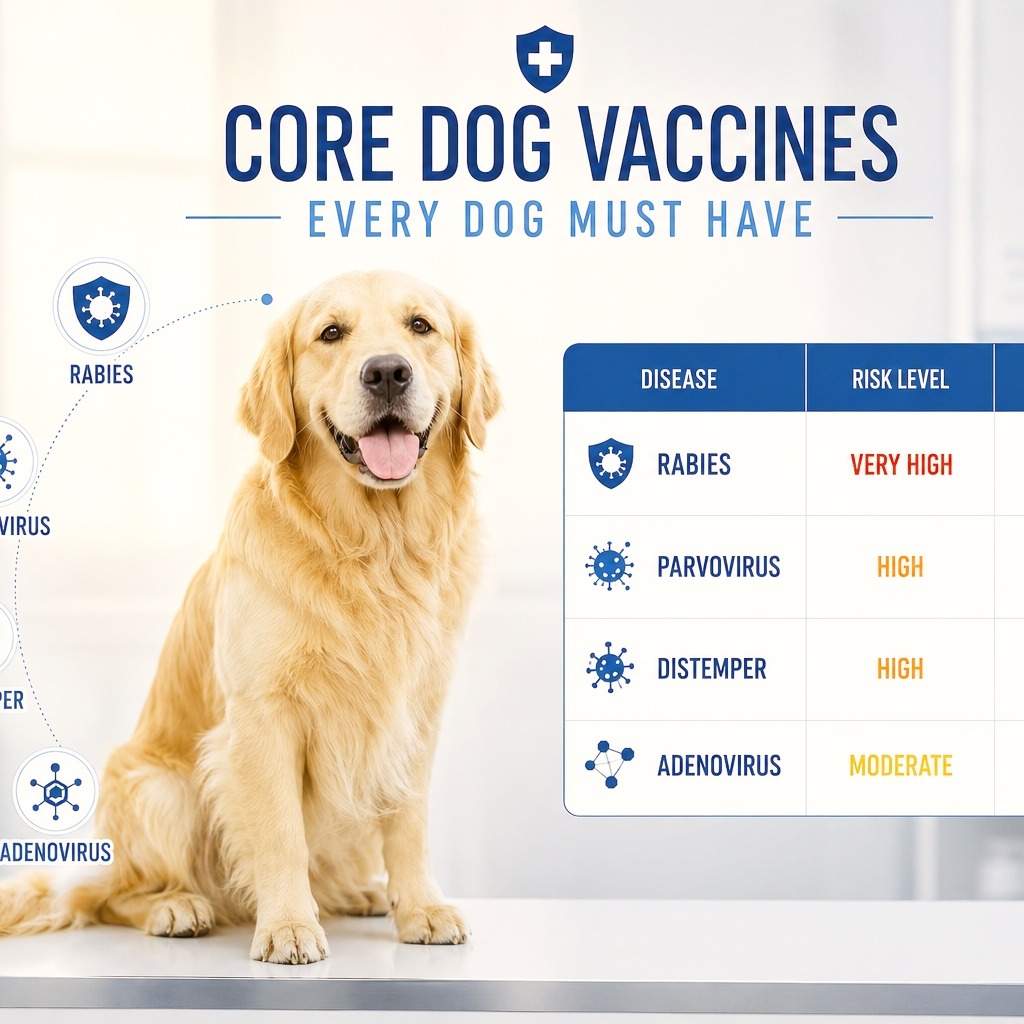
Core vaccines are the foundation of preventive care for dogs. Every dog needs them regardless of lifestyle. These include the rabies vaccine for dogs, as well as protection against distemper, parvovirus, and adenovirus. These diseases are dangerous and often deadly. That is why core dog vaccines are required in most countries. Rabies is especially important because it affects both animals and humans.
A simple comparison helps:
| Disease | Risk Level | Protection Needed |
| Rabies | Very High | Mandatory |
| Parvovirus | High | Essential |
| Distemper | High | Essential |
Without these vaccines, healthy dogs are at serious risk even in safe environments.
Non-Core Dog Vaccines Based on Lifestyle and Risk
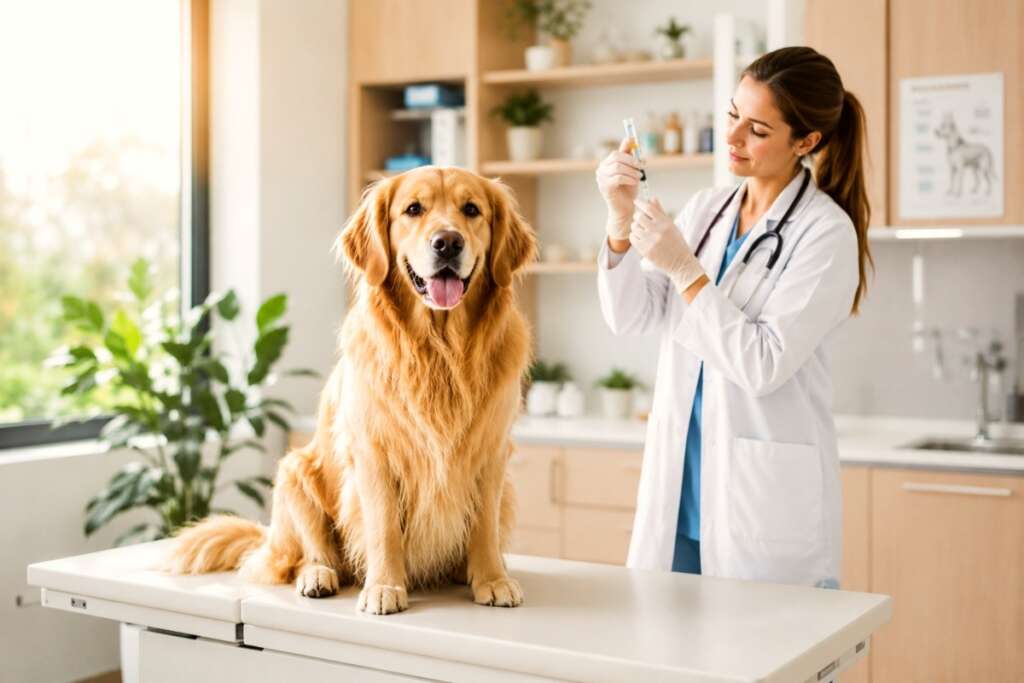
Non-core vaccines are flexible. They depend on your dog’s lifestyle, travel, and environment. These are part of smart pet vaccination planning. For example, the Bordetella vaccine protects dogs in daycare or boarding. The leptospirosis vaccine for dogs protects dogs exposed to water or wildlife. The dog Lyme disease vaccine is useful in areas where ticks are a problem. The dog vaccination schedule depends on the risk. That’s why vets change the dog immunization schedule for each pet.
Core vs Non-Core Dog Vaccines and Factors That Affect Your Dog’s Vaccination Plan
Core vaccines protect against deadly and widespread diseases. Non-core vaccines protect based on lifestyle risk. This difference helps owners make smart choices in pet health care. Core vaccines are always required. Non-core vaccines depend on exposure. For example, hiking dogs may need Lyme protection. City dogs may not. This balance helps improve dog wellness without over-vaccination.
Factors That Influence Your Dog’s Vaccination Plan
Every dog is different. Age, breed, lifestyle, and location all matter. This is why a dog is important for a vet Visit arrangement. A city dog and a farm dog do not need the same plan. Travel also changes vaccine needs. That is why travel vaccines for dogs may be required. Veterinarians study a dog’s health care history before making a plan. This ensures safe and effective protection.
Dog Vaccination Schedule: Puppy Shots, Adult Vaccines, and Booster Guidelines
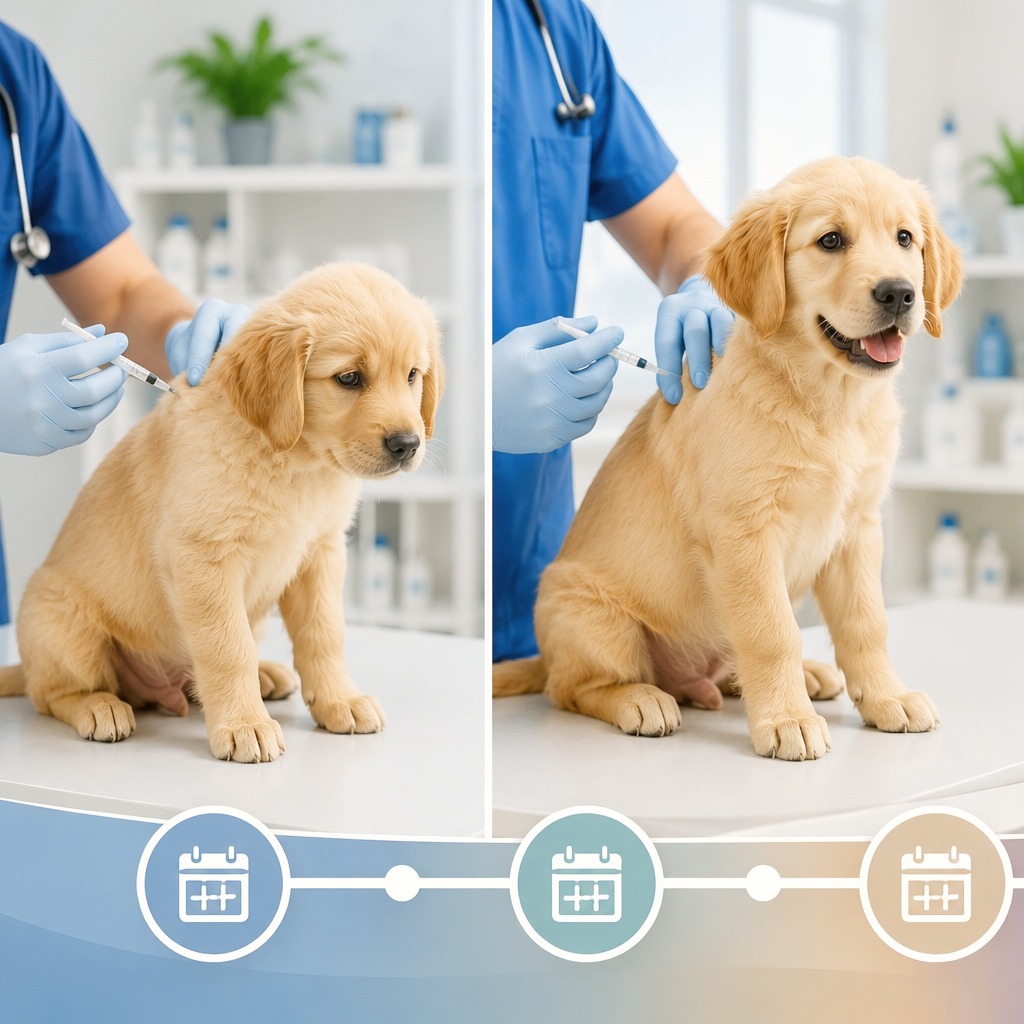
Puppies have weak immune systems, so they need to be protected early on. Puppy vaccinations are generally started at 6-8 weeks of age. It is continued in a series of puppy vaccinations until full protection is built. Each visit makes it stronger. Missed doses can break the chain of protection. That’s why puppy shots have to be given on a strict schedule.
A simple example schedule:
| Age | Vaccine Stage |
| 6–8 weeks | First puppy shots |
| 10–12 weeks | Booster dose |
| 14–16 weeks | Final puppy vaccines |
This process supports long-term puppy care and strong pet health care
Adult dogs still need to be protected. Vaccines don’t last forever. That’s where dog booster shots come in for lifelong immunity. Some vaccines last a year. Others are three years old. Regular vet visits keep the dog’s vaccination schedule up to date. Booster shots keep the canine medicine effective. If they are missing, immunity slowly fades. This can cause infection in even healthy dogs.
Side Effects of Dog Vaccines and What Is Normal
Mild reactions after vaccination are common. These are common side effects of vaccines in dogs and show that the immune system is working. Your dog may be tired, and there may be a little swelling. Some dogs may also eat less for a short period. This is the standard care for dogs after vaccinations.
Serious reactions are rare but important:
| Normal Reaction | Serious Reaction |
| Mild tiredness | Breathing trouble |
| Small swelling | Severe vomiting |
| Low energy | Facial swelling |
If serious signs appear, visit a pet clinic immediately for veterinary care for dogs.
Common Myths About Dog Vaccines and When to Visit a Vet
Many myths confuse pet owners. Some people think badly of vaccines. Others believe indoor pets do not need them. These thoughts are wrong. Vaccines are tested under strict rules of animal health. They are safe and important to prevent disease in dogs. Germs spread easily, and even indoor pets need protection. A good dog carer always gets their dog vaccinated.
Regular Vet Visits for Lifelong Dog Health
If you’re going through puppy stages, booster updates or lifestyle changes, see a vet. Regular visits keep your dog’s immunisation schedule on track. Vets use global veterinary services standards to keep your pet safe. They also individualise vaccines according to health conditions.
If you’re not sure, ask. Good medical care for dogs protects your pet from long-term risk.
FAQs
Are dog vaccines actually necessary?
Yes, dog vaccines are important and help to protect against deadly diseases and to encourage long-term immunity.
What dog vaccines should not be given together?
Depending on your dog’s health, some vaccines can be spaced out, but only a vet can decide the safe combination.
What two vaccines are most important for dogs to have?
The two most important vaccines for dogs are the rabies vaccine and the distemper-parvovirus (DHPP) vaccine. These vaccines can be life-saving for your dog from serious diseases.
Conclusion
Vaccinating your dog is important for a healthy immune system and lifetime protection. A proper dog vaccination schedule can prevent serious diseases and enhance your dog’s health in general. Regular vaccination of your pet is an effective means of Immunity against disease, allowing your pet to live a healthier, longer, and happier life.
