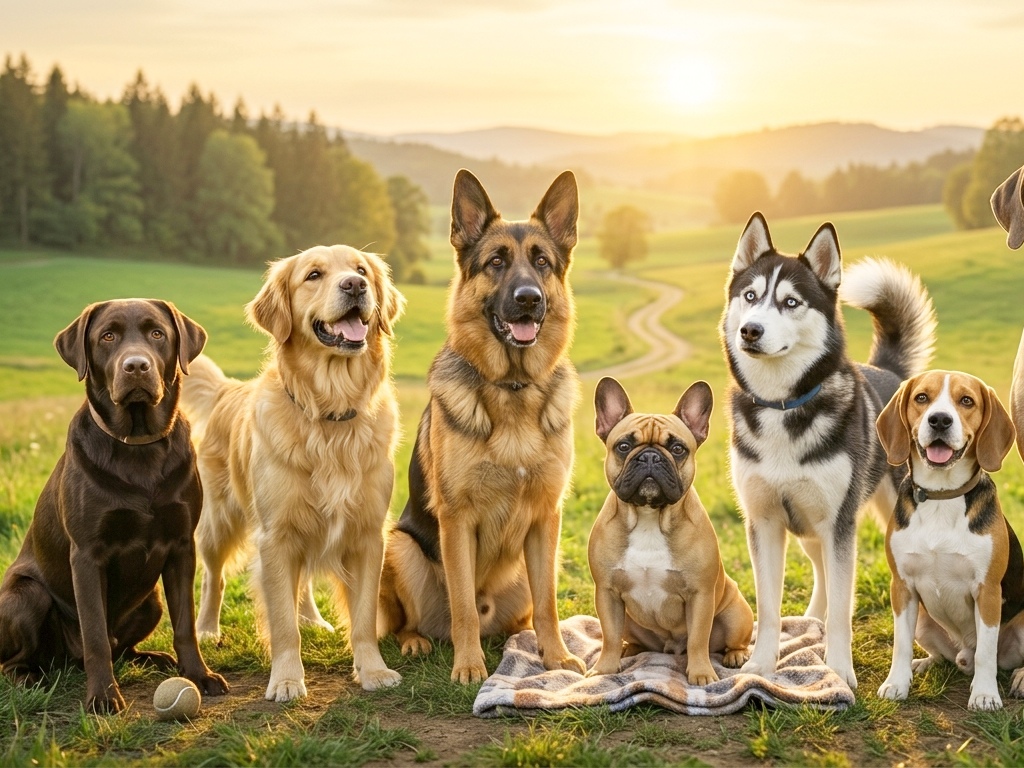
Dog varieties are incredibly diverse, offering different sizes, personalities, and energy levels for every type of owner. Understanding dog varieties helps you choose the right companion that fits your lifestyle, whether you want a calm pet or an active outdoor partner. Some Dogs are active athletes who enjoy outdoor adventures. Others are peaceful companions who like quiet evenings by your side. Knowing the different dog breeds makes it much easier to find a canine companion that really suits your personality and lifestyle.
For thousands of years, humans have bred dog varieties for certain purposes. Some were raised to herd sheep; others were used to guard homes or to help hunters follow prey. Today’s pet dogs serve many purposes, from loyal family members to working and therapy animals. This comprehensive Dog Guide covers breed history, physical characteristics, and important factors to help you make an informed selection.
Dog Varieties by Size

One of the simplest ways to get a handle on Dog breeds is to view Dog breeds by size. Size impacts nearly every aspect of the dog’s life, including how much exercise they need, how much space they need to live, how much they should be fed, and even their life expectancy. Some want small friends they can snuggle up with on the sofa; others want to own giant dogs that look like gentle bears. Knowing the size of a dog breed will help you narrow down your choices and avoid any unpleasant surprises later on.
What’s interesting is that personality isn’t always a matter of size. Some giant breeds are surprisingly gentle, and some small breeds are full of confidence and energy. A dog that fits your lifestyle is often a happier, healthier companion.
| Size Category | Typical Weight Range | Common Traits |
| Small | Under 25 pounds | Portable, adaptable, lively |
| Medium | 25–60 pounds | Versatile, active, social |
| Large | 60–100 pounds | Loyal, energetic, protective |
| Giant | Over 100 pounds | Gentle, calm, impressive |
Dog Varieties by Group

A useful way to understand why different dogs behave the way they do is to look at Dog breed groups. Most breed organizations categorize dogs according to the jobs they were originally bred for. Some breeds would retrieve game for hunters, others would protect livestock or chase game long distances. These ancient purposes still influence our modern behavior, instincts, and ability to learn.
Learning about these groups is valuable dog information because dogs tend to retain traits that were useful hundreds of years ago. A herding breed might naturally want to herd kids together, while a hound might be interested in interesting smells. Understanding these groups will help you understand Dog breeds by temperament, Dog breed activity level, and the type of environment each breed is likely to thrive in.
| Dog Group | Original Purpose | Common Traits |
| Sporting | Hunting assistance | Friendly, energetic, trainable |
| Working | Guarding and pulling | Intelligent, strong, loyal |
| Herding | Managing livestock | Smart, active, responsive |
| Terrier | Hunting small animals | Brave, determined, lively |
| Toy | Companionship | Affectionate, adaptable, social |
| Hound | Tracking prey | Independent, curious, persistent |
Dog Varieties for Different Lifestyles
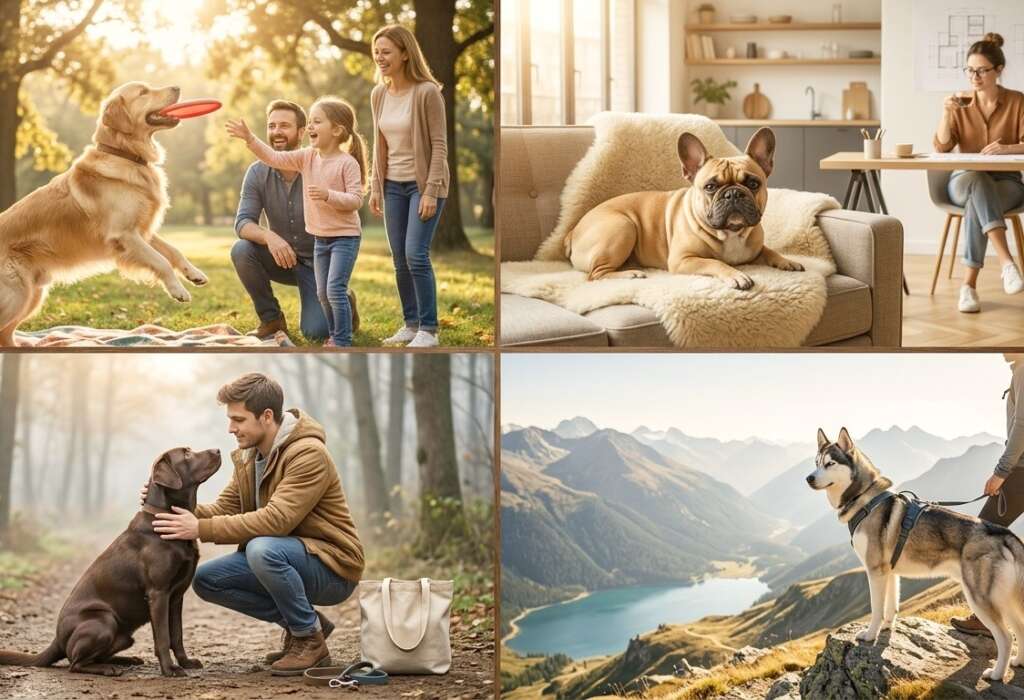
Each dog has its own set of requirements and personalities. Some require highly energetic dogs, but some also want something more laid-back. By matching yourself with the right breed, you could have a happier bond and make care-taking much easier.
Dog Varieties for Families
The Labrador Retriever, Golden Retriever, and Beagle are all wonderful family dogs. They are friendly and patient with both adults and children.
Dog Varieties for Apartments
The French Bulldog, the Pug, and the Shih Tzu are well-suited for small houses. Their moderate exercise requirements mean they make good apartment dogs.
Dog Varieties for First-Time Owners
The Labrador Retriever, the Poodle, and the Cavalier King Charles Spaniel are often recommended for first-time pet owners due to their easy-going nature.
Dog Varieties for Active People
The Border Collie, the Siberian Husky, and the Australian Shepherd are perfect for people who are very active and love outdoor sports.
Dog Varieties chosen by Characteristics

Each breed has a set of traits that affect life with the dog on a day-to-day basis. Knowing Dog breed characteristics allows you to select a companion that will fit naturally into your home. These include dog breed temperament, activity level, grooming needs, and social behavior. A high-energy dog may require long walks and interactive games, whereas a calmer breed may be content with shorter activities and quiet companionship.
Some breeds have curly coats that hold onto loose hair, while others shed heavily all year. Knowing Dog breed shedding is especially important if you like a tidy home or are allergic. Likewise, knowing temperament and energy levels can prevent mismatched expectations and build a more rewarding relationship between you and your dog.
| Characteristic | Why It Matters |
| Temperament | Influences behavior and social interactions |
| Activity Level | Determines exercise requirements |
| Trainability | Affects learning and obedience |
| Coat Type | Impacts grooming needs |
| Shedding | Influences household maintenance |
| Size | Determines space and feeding requirements |
FAQs
What are the top 10 most popular dogs?
Here are the top 10 most popular dogs
- Labrador Retriever
- French Bulldog
- Golden Retriever
- German Shepherd
- Poodle
- Bulldog
- Beagle
- Rottweiler
- Dachshund
- German Shorthaired Pointer
What are the top 20 dog breeds?
The top 20 Dog Breeds are the following
Labrador Retriever, French Bulldog, Golden Retriever, German Shepherd, Poodle, Bulldog, Beagle, Rottweiler, Dachshund, German Shorthaired Pointer, Pembroke Welsh Corgi, Australian Shepherd, Yorkshire Terrier, Cavalier King Charles Spaniel, Doberman Pinscher, Boxer, Siberian Husky, Great Dane, Shih Tzu, and Miniature Schnauzer. These breeds are popular for their unique personalities, intelligence, and companionship.
What is the no. 1 dog breed?
The French Bulldog is currently the number one dog breed in popularity rankings. It is loved for its affectionate nature, compact size, and adaptability to different living environments.
Conclusion
Each Variety of dog has a unique history, unique characteristics, and requirements. Once you learn more about the size, temperament, care requirements, and exercise level of different breeds of dogs, you can select a suitable dog breed for yourself and have an enjoyable relationship with your dog throughout your life. The ideal dog may not always be the most fashionable or popular breed, but it will fit right into your everyday life and will be cared for and loved by you.
Researching hypoallergenic and low-shedding dog breeds, or the best dog breed for your family, will enable you to make an educated decision as to what is right for you and your family, so you will have a loving companion that will bring happiness for many years to come.
