
The Labrador Retriever is one of the most famous dog breeds in the world. They are known for their friendly nature, loyalty, and intelligence. They are very energetic and highly trainable dogs. They are basically bred in Newfoundland to help fishermen pull in nets. This medium-large breed is not just a pet but an excellent working dog, a helper, and a beloved family member. They are one of the most trusted breeds in the world. They are known as “Labs” and are the most popular dog breed in the United Nations, the United Kingdom, and many other countries.
Origin and History of “Labs”

The Labrador Retriever originated in the Canadian province of Newfoundland and Labrador. The writers describe the first Labrador as being not larger than an English Pointer, more often black than other colours, long in its head and nose with a deep chest, fine legs, and a short and smooth coat, and did not carry its tail as high as the Newfoundland. In the early 1800s, fishermen used them to retrieve fishing nets and catch fish that escaped from lines. Their extraordinary swimming ability and “soft mouth” made them perfect for the job. Later, British hunters brought Labradors to England and refined the breed for retrieving game. By 1870, the name Labrador Retriever had become common in England. Nowadays, they serve as guide dogs, therapy dogs, search and rescue dogs, and beloved family pets.
Physical Characteristics
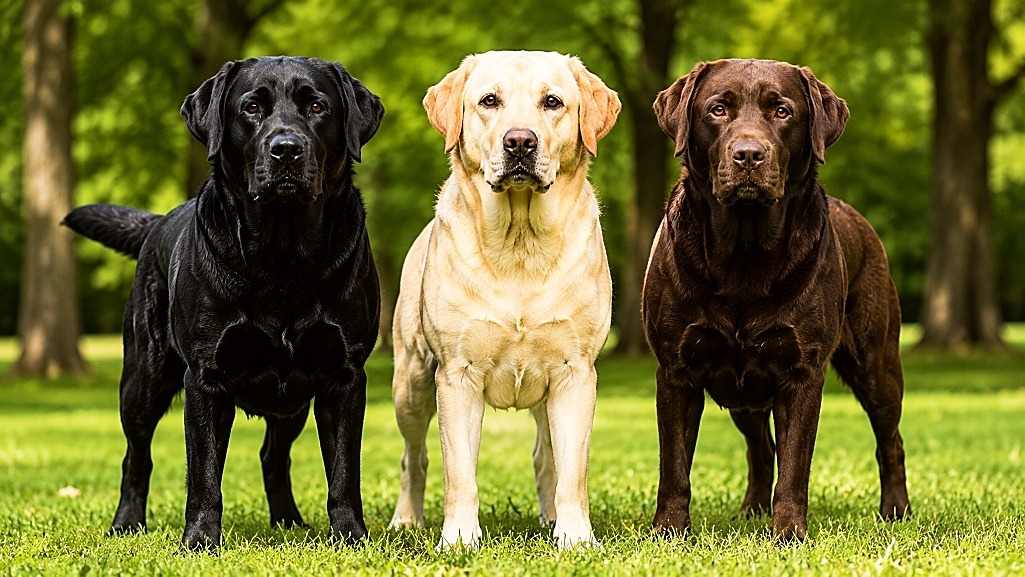
There is a great deal of variety among Labradors. The following characteristics are based on the United States and the American Kennel Club standard.
Coat: The Labrador Retriever’s coat should be short and dense, but not wiry. The coat is water-resistant, so the dog does not get cold when taken to the water in the winter. That means that the dog naturally has a slightly dry, oily coat. Acceptable colours are black, yellow, and chocolate.
Size: Labradors are a medium-large breed. They should be as long from the shoulder to the base of the tail as they are from the floor to the withers.
Head: The head should be broad with slightly pronounced eyebrows. The eyes should be kind and expressive. Appropriate eye colours are brown and hazel. The lining around the eyes should be black. The ears should hang close to the head and be set slightly above the eyes.
Jaws: The jaws should be strong. The muzzle should be of medium length and should not be too tapered. The jaws should hang slightly and curve gracefully back. Body:
The body should have a powerful and muscular build. Here is a quick breakdown of the Labrador Retriever’s profile.
| Characteristic | Details |
| Average Weight | 25–36 kg (55–80 lbs) |
| Average Height | 55–62 cm (21.5–24.5 inches) at the withers |
| Life Expectancy | 10–13 years |
| Temperament | Outgoing, friendly, eager to please, and athletic |
Health, Nutrition, and the “Always Hungry” Gene

Labradors are generally robust, but they do have specific genetic vulnerabilities that owners must manage.
The Obesity Trap: Recent genetic research shows many Labs lack the chemical trigger that signals fullness. They will eat indefinitely, making strict portion control vital.
Joint Care: Due to their heavy frame and active lifestyle, they are prone to hip and elbow dysplasia.
Grooming Needs: Their dense double coat sheds year-round. Weekly brushing—and daily brushing during seasonal changes—is required to manage the hair. In both countries, all Labrador Retrievers are descended from British lines.
The Secret to Their Success: Temperament
The true magic of the Labrador lies between its ears. They are famously friendly, outgoing, and eager to please.
High Intelligence: They rank among the smartest dog breeds, making them highly trainable. Gentle Nature: They possess a “soft mouth”—an evolutionary trait meant to retrieve game without damaging it—which translates to gentleness with children.
Universal Socialization: They generally coexist peacefully with other dogs, cats, and strangers alike. However, this intelligence requires stimulation. A bored Labrador is a creative destructor, often turning to chewing or digging if left alone for too long. Because of their calm and trainable nature, Labradors are widely used as service dogs and in therapy programs.
Care and Maintenance
If you own a Labrador, it comes with responsibility. You should follow these things in daily life. Exercise: Needs at least 60 minutes of activity daily. A walk plus playtime is ideal.
Diet: Labs love food and can become overweight. A balanced diet and portion control are important.
Grooming: Brush their coat 2-3 times a week to manage shedding.
Health: Common issues include hip dysplasia and obesity. Regular vet checkups help. With proper care, Labradors live 10 to 12 years.
Personality & Temperament

Renowned as the world’s most popular dog breed, the Labrador is incredibly social. They possess an even temperament and generally get along wonderfully with children and other pets. However, because they were bred for stamina and hunting, they have high energy levels and require a job or daily activity to stay happy. Without adequate mental and physical exercise, they can become hyperactive or destructive.
One Breed, Two Distinct Philosophies
While the breed standard remains uniform, decades of specialized breeding have created two distinct types of Labradors.
1. The English (Show) Lab
Bred primarily for conformation shows, these dogs are stockier and heavier. They feature broader heads, thicker necks, and a calmer, more easygoing temperament. They are excellent fits for relaxed household environments.
2. The American (Field) Lab
Bred for hunting and field trials, these dogs are taller, leaner, and more athletic. They possess a narrower head and a much higher energy drive. They thrive best when given a specific job, sport, or intense daily exercise routine.
FAQs
Do Labradors get along with cats and other dogs?
Yes. With proper socialization, Labradors get along very well with other pets.
Q2. How long do Labradors live?
With good care, Labradors live 10-12 years.
Q3. Are Labradors good for first-time dog owners?
Yes. Labs are easy to train, friendly, and forgiving. They are one of the best breeds for first-time owners.
Q4. Do Labradors bark a lot?
No. Labs are not big barkers. They may bark to alert you, but they are generally quiet dogs.
Q5. Can Labradors live in apartments?
Yes, but only if they get enough daily exercise. Without walks and playtime, they can get restless in small spaces.
Q6. How much does a Labrador cost in Pakistan?
On average, a Labrador puppy costs between PKR 40,000 and PKR 120,000. Price depends on breeder, color, and pedigree.
